




You don’t need to live near your Airbnb to run it well.
In fact, many of the most efficient hosts don’t.
Remote Airbnb hosting isn’t about being hands-off.
It’s about building systems that allow your short-term rental to run smoothly—no matter where you are.
Because the goal isn’t just to host.
👉 It’s to operate a scalable short-term rental business.
What Is Remote Airbnb Hosting?
Remote Airbnb hosting means managing your short-term rental property from a different location using:
- Automation tools
- Standardized systems
- Local team support
- Clear operating procedures
When done correctly, guests never notice that you’re not local.
1. Build a Reliable Local Team
Your local team is the foundation of successful remote hosting.
Without it, everything becomes reactive.
Your core team should include:
- A professional cleaner (your most important partner)
- A handyman or maintenance contact
- Backup support for emergencies
What to prioritize:
- Reliability over cost
- Strong communication
- Attention to detail
👉 Your cleaner isn’t just cleaning—they’re your eyes and ears on the property.
2. Standardize Your Airbnb Operations
If you’re answering the same questions repeatedly, you don’t have a system yet.
Creating repeatable processes is key to remote Airbnb management.
Standardize:
- Check-in instructions
- Checkout procedures
- Cleaning checklists
- Maintenance workflows
This reduces:
- Guest confusion
- Errors
- Daily involvement
3. Automate Guest Communication
Fast response times are critical for Airbnb success.
Automation allows you to maintain responsiveness without being available 24/7.
Automate messages for:
- Booking confirmations
- Check-in details
- Mid-stay check-ins
- Checkout reminders
👉 Automation improves guest experience while saving you time.
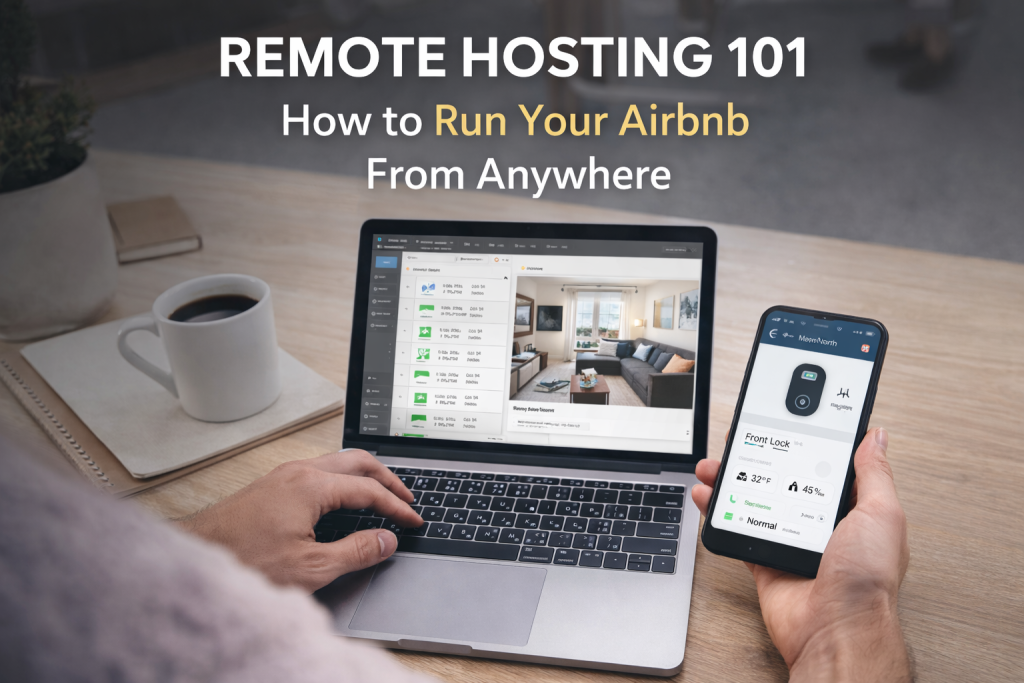
4. Use Smart Locks for Remote Access
Physical keys don’t scale.
Smart locks are essential for remote Airbnb hosting.
Benefits:
- No in-person key exchanges
- Unique access codes for each guest
- Remote access control
- Increased security
👉 This is one of the highest ROI upgrades for short-term rental hosts.
5. Monitor Your Airbnb Property Remotely
Even if you’re not there, you still need visibility.
What to monitor:
- Noise levels
- Occupancy
- Temperature
- Entry activity
Remote monitoring helps:
- Prevent unauthorized parties
- Protect your property
- Respond quickly to issues
6. Set Clear Expectations for Guests
Clear communication reduces problems before they happen.
Your Airbnb listing should clearly outline:
- House rules
- Check-in process
- Amenities included
- Property limitations
👉 The clearer your expectations, the smoother your operations.
7. Optimize the Guest Experience (Without Being There)
Great remote hosts focus on experience—not just logistics.
Your property should feel:
- Thoughtful
- Organized
- Easy to navigate
Focus on:
- Clear instructions (WiFi, appliances, check-in)
- Clean, clutter-free spaces
- Simple, functional design
👉 A seamless stay leads to better reviews and repeat bookings.
Common Remote Hosting Mistakes
Avoid these common pitfalls:
- Hiring based on price instead of reliability
- Not having a backup plan for emergencies
- Relying too heavily on manual communication
- Ignoring property performance metrics
- Trying to manage everything yourself
STR Community Insight
Across the STR Community, successful remote hosts consistently treat their Airbnb like a system-driven business, not a side project.
Remote Airbnb Hosting Checklist
If you want to run your Airbnb from anywhere, start here:
- Build a reliable local team
- Create standardized operating procedures
- Automate guest communication
- Install smart locks
- Set up remote monitoring systems
- Clearly define guest expectations
- Optimize your property for ease of use
👉 Strong systems = less stress and better performance.
Conclusion
Remote Airbnb hosting isn’t harder—it’s more intentional.
When your systems are strong, your business doesn’t depend on your location.
And that’s how you scale.